Large three-phase inverters rated at 55 kW and above
These are clearly the larger, professional‑grade systems — the types used in large factory halls, on the roofs of agricultural buildings, and in utility‑scale solar fields. They often offer exceptionally high efficiency and long warranty periods on the installation. Different standards apply to these installations, although the fundamental testing principles remain the same as for lower‑power systems.
With Cinergia’s bi‑directional B2C power supplies, we reach up to 160 kW per unit and a maximum of 1,280 kW per system. With the Itech IT6600C power supplies, we start at 42 kW per unit in a 3U 19” form factor. These units can be combined up to 420 kW in a single 19” rack, and ultimately to >10 MW total system power. At these power levels, the advantage is that the system can be built with redundant power modules, minimizing the risk of downtime.
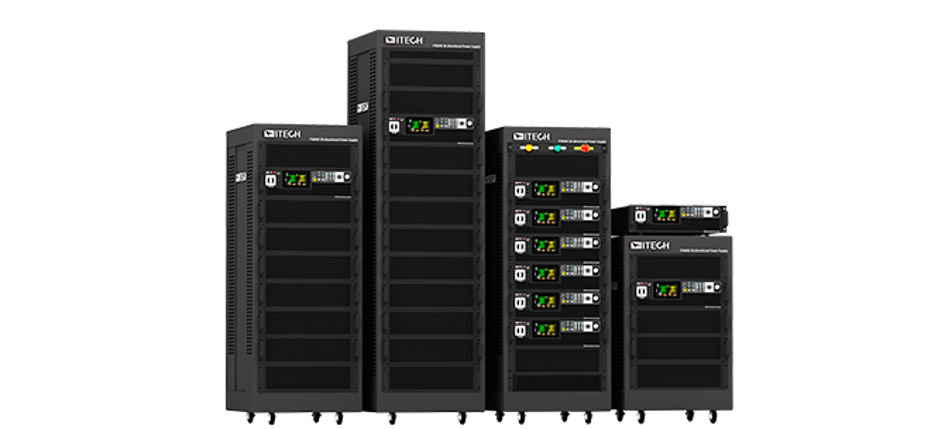
At these power ratings, we almost never see solar inverters combined with battery‑energy‑storage capability. However, this may certainly change in the future given the ongoing changes introduced by utilities and policymakers. Even so, the instrumentation mentioned above can also be used for battery simulation.
There are now also grid emulators on the market that can handle these power levels. At Itech, this includes the IT7900E series, starting with a 21 kVA base model. This can be expanded with multiple slave units up to 210 kVA per 19” rack, and a maximum system power of >1 MVA.
Cinergia also offers several models in this power range. The base model is the GE‑series AC version, available from 15 kVA up to 160 kVA. Up to eight units can be paralleled for a total of 1,280 kVA. In addition, Cinergia now offers the GE&EL 30 AC/DC SiC unit, a 30 kVA 19” rack‑mount system. This unit is also available in a master/slave configuration up to 180 kVA.
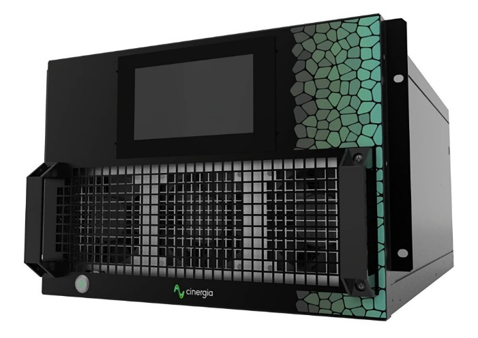
In many cases, inverters in this power class can operate both grid‑connected and in microgrid configurations. Fortunately, we now also have AC regenerative loads capable of handling these power levels — and unsurprisingly, these are manufactured by the same companies mentioned earlier.
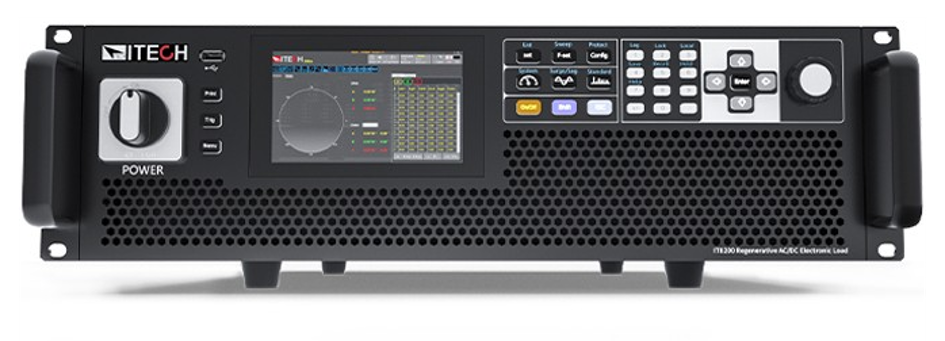
The Itech IT8200 series includes the IT8212 and IT8215 models, rated at 12 kVA and 15 kVA respectively. Beyond that, the IT8200E series starts at 21 kVA, expandable with two slave units to 63 kVA. This is also a regenerative AC load, meaning the absorbed power is fed back into the grid rather than converted into heat. The system supports both delta and star three‑phase configurations. As an additional feature, it includes a high‑accuracy power analyzer and can measure harmonics up to the 50th order.
Cinergia also offers several regenerative AC load models in this power range. The EL‑series AC version is a regenerative AC load starting at 15 kVA and going up to 160 kVA in a single unit. The previously mentioned GE&EL 30 AC/DC SiC unit can also be used as a regenerative AC load. This 30 kVA rack‑mount unit is available in a master/slave configuration up to 60 kVA.
With the Itech IT7900EP series, you gain dual functionality: in addition to serving as a grid emulator, the unit can also operate as a regenerative AC load. The base model starts at 21 kVA, and master/slave configurations allow expansion to >1 MW. This makes it a highly flexible test solution for both types of inverters.
A good multi‑channel power meter
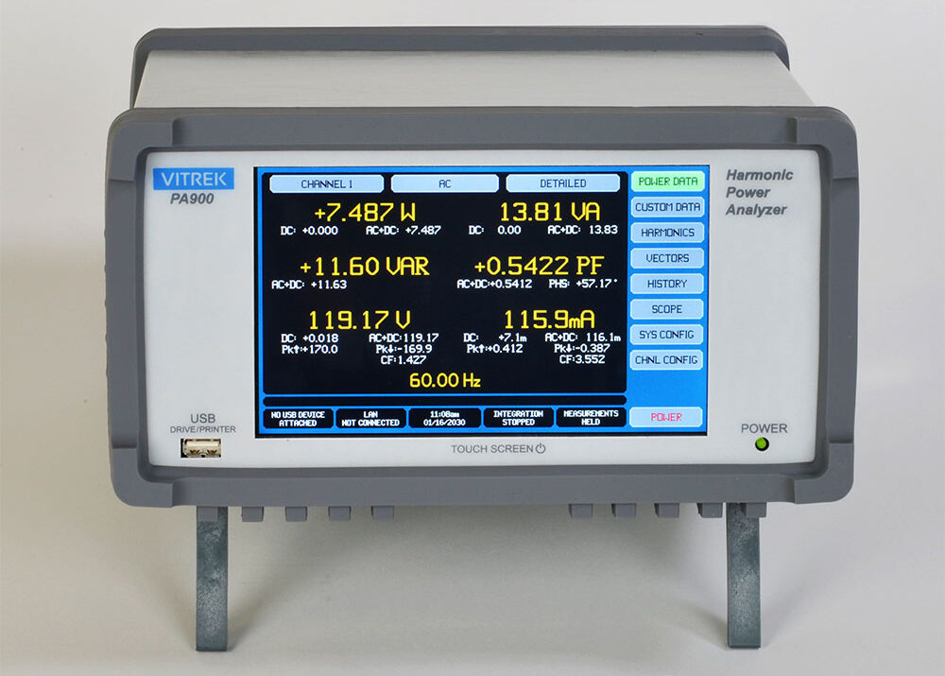
In all of the configurations mentioned above, it is advisable to use a high‑accuracy power analyzer. At least two channels are required for a single‑phase inverter and four channels for a three‑phase inverter. High accuracy is essential here because we are dealing with efficiency measurements. If you want to measure an efficiency of 97% or 98% accurately, you are looking at 2–3% of the total power. You want to measure that 2–3% with an accuracy of around 1%. This quickly leads to the need for voltage and current measurement accuracy in the range of 0.01% to 0.03%, resulting in a total power‑measurement accuracy of approximately 0.05%.
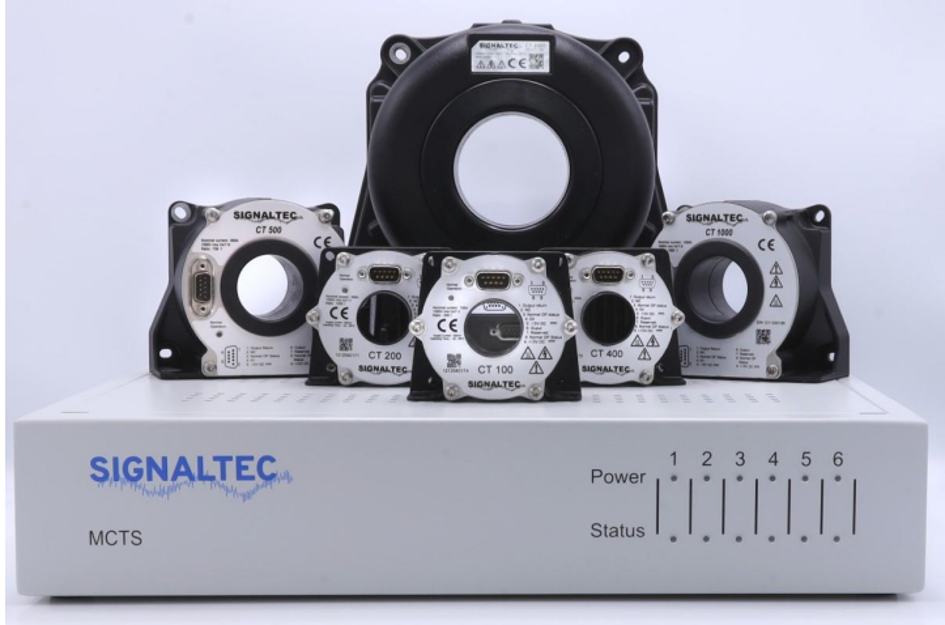
For such measurement results, we offer solutions from Yokogawa and Vitrek, complemented by high‑current sensors from Signaltec. For more information, please refer to the product pages below.
If you are interested in a test setup for a solar inverter, please contact us. We will gladly provide non‑binding advice on the best test configuration for your application.
Read more on the following pages:

