ECU and VCU Controllers
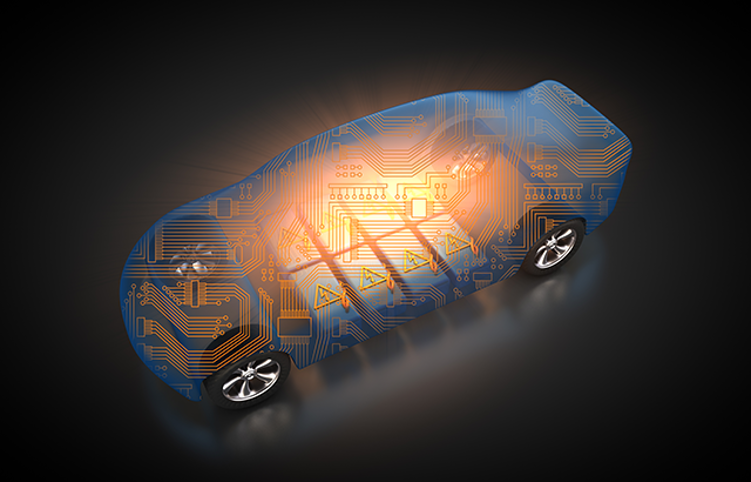
Electronics play a central role in modern vehicles, and these systems are controlled by various control units. Two key terms in this context are the ECU (Electronic Control Unit) and the VCU (Vehicle Control Unit). Although both are referred to as the “brains” of the vehicle, they have distinctly different functions and scopes.
Electronic Control Unit
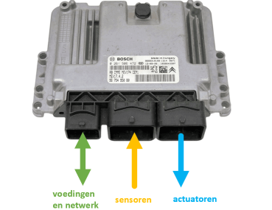
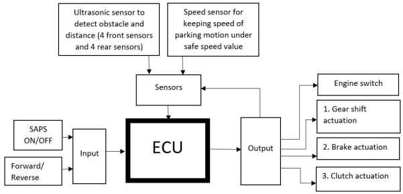
The ECU is essentially the most important control unit in vehicles with an internal combustion engine. This unit is specifically responsible for controlling and optimizing engine operation. It continuously receives signals from various sensors, such as the air pressure sensor, temperature sensors, throttle position sensor, and oxygen sensors in the exhaust. Based on this data, the ECU calculates how the engine should respond. For example, it determines exactly how much fuel should be injected, when ignition should occur, and how the air-fuel ratio should be adjusted. All of this happens in fractions of a second and changes constantly depending on driving conditions such as acceleration, idling, or driving under load. The ECU’s goal is to find an optimal balance between performance, fuel economy, and emissions.
Vehicle Control Unit
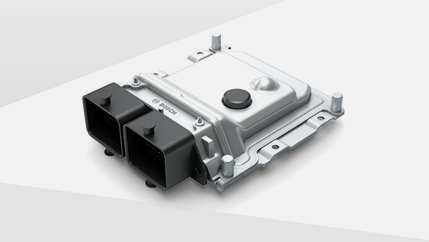
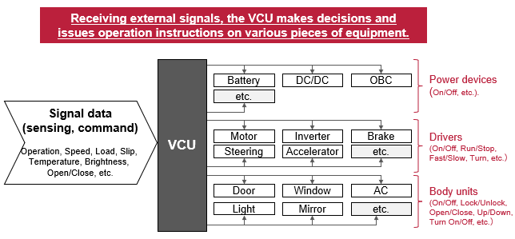
The VCU, on the other hand, has a much broader role and is particularly prominent in modern electric and hybrid vehicles. Instead of controlling a single specific component, the VCU acts as a central coordinator that synchronizes various systems within the vehicle. You can think of the VCU as a kind of “overarching brain” that determines how the vehicle should behave as a whole. In an electric car, for example, the VCU determines how the electric motor is controlled based on the accelerator pedal, how energy from the battery is used, and when regenerative braking is applied to recover energy. At the same time, it ensures that other systems—such as brakes, traction control, and, if applicable, a separate battery management unit—work together properly. Driving modes such as “eco” or “sport” are also typically managed by the VCU, which adjusts the vehicle’s response to the selected settings.
Read more on the pages below:
– The difference between the two and the shift toward scalable solutions
– Controller Testing – Simulating Actuators with Multi-Channel Electronic Loads

