
Objectives of Anti-Islanding
Anti‑islanding protection is the safety function integrated into grid‑connected and hybrid inverters. This protection must activate as soon as the DER (inverter) detects an abnormal condition in the electrical grid. This may include overvoltage, undervoltage, frequency deviation, or any other grid disturbance. In such cases, the inverter must immediately cease supplying energy to the grid. This is essential to:
- protect utility personnel and end‑users from unexpectedly energized circuits;
- prevent damage to connected equipment caused by voltage or frequency mismatch;
- comply with relevant standards (IEEE 1547, IEC 62116, UL 1741 SA) and regional grid codes.
The importance of anti‑islanding protection cannot be overstated. (Inter)national standards have been established to define system requirements, and inverters must meet strict specifications and performance levels to prevent islanding (including NEN 62116:2014).
The figure below shows a typical test configuration used to verify the anti‑islanding function.
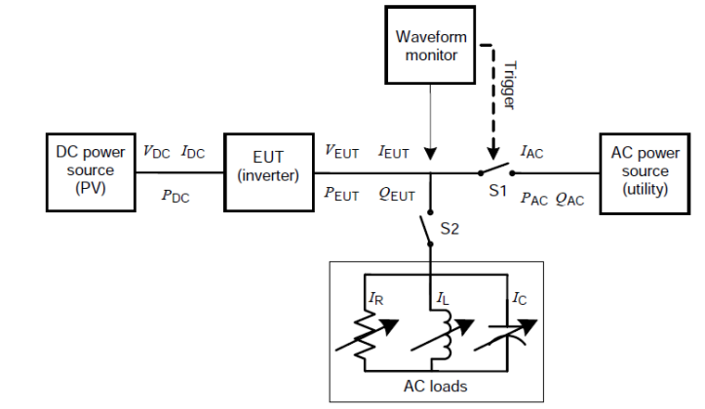
Anti‑islanding tests are mandatory for power‑conversion equipment that delivers energy to the grid, such as:
- Solar PV inverters
- Bidirectional EV chargers
- Battery Energy Storage Systems (BESS)
- Vehicle‑to‑Grid (V2G) / Vehicle‑to‑Everything (V2X) systems
- Microgrids operating in grid‑tied mode
- Smart inverters / advanced grid‑support inverters
Read more on the pages below:

