The difference between the two and the shift toward scalable solutions
The main difference between the two, therefore, lies in their scope and role. The ECU is a specialist that focuses on the engine and is primarily found in classic vehicles with internal combustion engines. The VCU is a generalist or coordinator that controls multiple subsystems and is particularly important in vehicles where energy management and system integration are more complex, such as in electric powertrains.
In modern cars, both concepts often coexist: a vehicle may have multiple ECUs for different functions (engine, brakes, airbags, transmission), while the VCU oversees the overall strategy and coordination. In summary, you could say that the ECU is responsible for ensuring that a specific component operates optimally, while the VCU ensures that all components work together to form a coherent and efficient whole.
In practice, vehicle manufacturers are increasingly choosing to combine functions rather than assigning them to strictly separate control units. Whereas there used to be a clear distinction between individual ECUs and a central VCU, modern vehicle architectures are evolving toward more integrated and scalable solutions.
One initial approach involves integrated controllers, in which vehicle coordination and drive control functions are combined within a single control unit. This results in a more compact architecture with shorter communication paths and potentially lower latency.
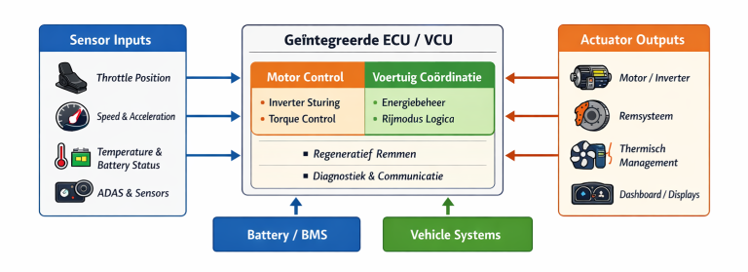
In addition, so-called domain controllers are becoming increasingly important. These controllers group multiple subsystems within a functional domain, such as powertrain, chassis, or energy management. Various functions are centralized within such a domain controller, thereby reducing the complexity of distributed communication between individual ECUs.
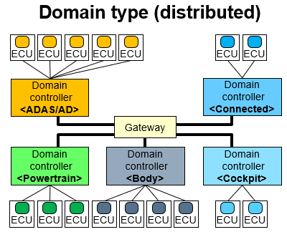
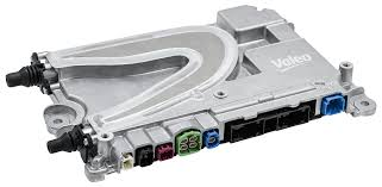
Today, the industry is shifting even further away from domain controllers toward Zonal Architecture, in which controllers are no longer grouped by function (domain) but by physical location within the vehicle. A key advantage of this architecture is the significant reduction in cabling. Because signals are processed locally, long cable runs are no longer necessary, resulting in reduced weight and simplified installation. In addition, this approach offers better scalability and flexibility, which is essential in the context of software-defined vehicles, where functionality is increasingly defined and updated via software.
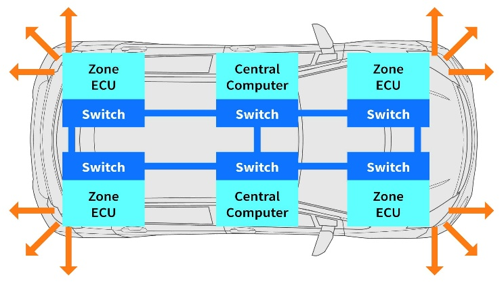
These developments underscore that the distinction between the ECU and the VCU in modern vehicles is less and less a matter of physical implementation and is increasingly shifting toward their functional roles within the system.
Read more on the pages below:
– ECU and VCU Controllers
– Controller Testing – Simulating Actuators with Multi-Channel Electronic Loads

