Essential Tests for Solar Panel Inverters
In addition to safety regulations and CE standardization tests (including EMC testing), there are, of course, functional tests. On this page, we focus specifically on functional testing.
These are the most common tests for solar panel inverters:
- Maximum Power Point Tracking Range (for voltage and current)
- Maximum Power Point Tracking Accuracy
- Maximum Power Point Tracking dynamic response
- Maximum Power Point Tracking when the panels are in the shade.
- Maximum continuous power
- Efficiency Testing
- Inverter Start and Stop Voltage and Power
- Shutdown procedure in case of excessive line voltage (depending on the Grid Code)
- Shutdown procedure in the event of an abnormal frequency (depending on the grid code)
- Anti-Island Test (depending on the grid code)
- Mandatory Power Factor Correction (depending on the Grid Code)
- Start-up Procedure After Shutdown
- The Fault-Ride-Through Capacity Test
For all of these tests, different standards apply depending on the inverter’s power rating, whether it is single-phase or three-phase, and the country’s grid code; you also want to be able to test it under various temperature conditions.
Let’s take a closer look at the various tests.
The Maximum Power Point Tracking range (for voltage and current) and the Maximum Power Point Tracking accuracy speak for themselves. What DC voltage and current range can the inverter handle, and how accurate is this control? Do we always get the maximum power out of any given weather or sunlight conditions? And while achieving maximum power with a certain control is one thing, how fast is this Maximum Power Point Tracking? The dynamic response is sometimes even more important than maximum efficiency—especially under slightly cloudy skies, for example.
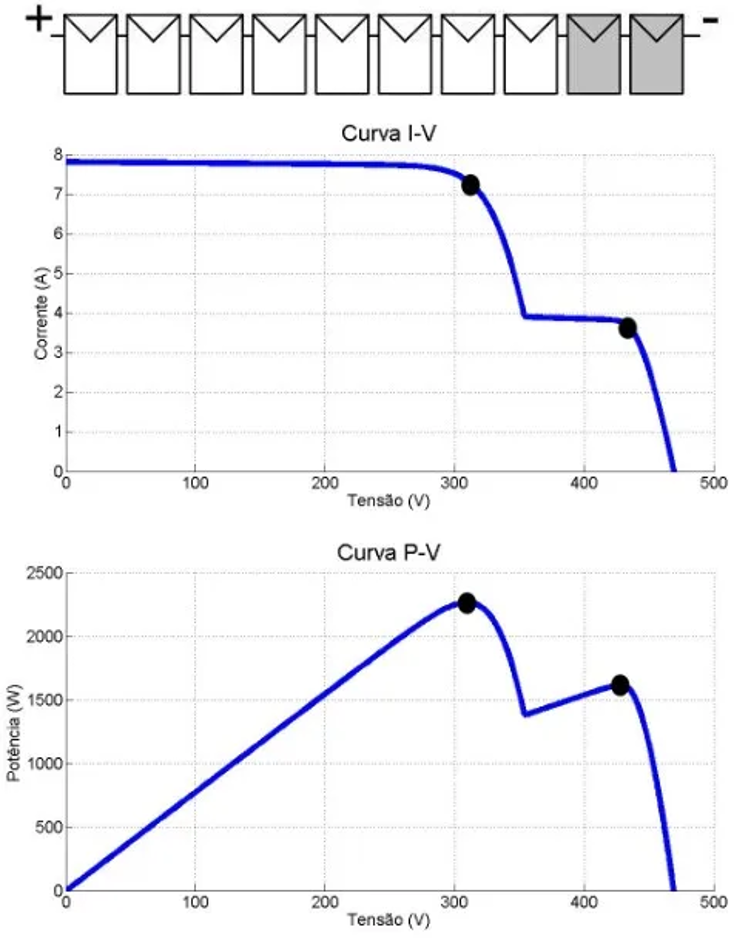
And that brings us straight to how MPPT works when part of the solar panel array is shaded. This creates a dual maximum power point—so how does the MPPT control system respond to this? You don’t want the inverter to get stuck at the lower point. The controller must therefore continue to search, within a certain margin, for a potentially higher power output, but at the same time, we don’t want to lose power during the time it takes to determine whether that higher power point actually exists. This is a trade-off that the manufacturer must address to achieve optimal control.
What is the inverter’s maximum continuous power output, and how does it compare to its peak power output? Naturally, you want to know whether the inverter meets its specifications. This information is also important for putting together the right array of panels.
Of course, it’s important to know how efficient the inverter is. These days, efficiency is often around 97 to 98 percent. But are these figures actually achieved in cloudy weather, when power output is lower?
The start and stop voltages and the inverter’s power output are standard specifications you’ll want to check.
All of the above tests are related to the specifications of the inverter’s DC input. The solar panel simulator must therefore be capable of testing all of these specifications. The following chapters list a number of specific solar panel simulators in the various power categories.
Next, we’ll look at the more advanced tests, which also depend on the grid code. This can therefore vary by country. Here, we’ll use the grid code in the Netherlands as a basis, but a manufacturer must ensure that the inverter is compatible with all countries where this unit is sold.
The shutdown procedure in the event of excessive line voltage. This depends on the inverter’s maximum power rating, but for simplicity’s sake, we’ll limit our discussion here to smaller installations. If the average voltage exceeds 264.5 Vl-n for xx minutes, the inverter must follow a specific procedure to shut down. First, the output power is reduced; if the high voltage persists, the inverter will eventually shut down.
A similar procedure applies for frequency deviations. If the frequency is between 49 and 51 Hz, power may be supplied as usual. If the frequency is half a hertz below or above this range, power may still be supplied as usual for at least 30 minutes. If the deviation is greater or the period exceeds 30 minutes, the inverter’s output power must be limited. If the deviation is too large, the system must be shut down within a specified time.
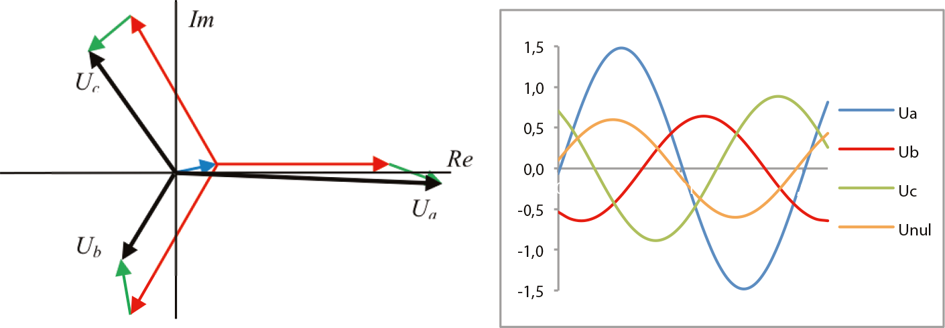
Current standards also specify a mandatory power factor correction. The inverter must be capable of supplying a certain amount of reactive power. This is also a requirement to consider when selecting a grid emulator. With a three-phase inverter, we can also examine the phase angle between the different phases. Normally, this is 120 degrees, but it can shift due to certain loads.
In an anti-islanding test, there are certain conditions that the inverter must meet if the grid voltage and frequency are lost. The inverter must then also shut down its output power within 2 seconds. This is for the safety of the technicians who will be restoring the grid. This is a fairly specific test that cannot always be performed using a standard grid emulator.
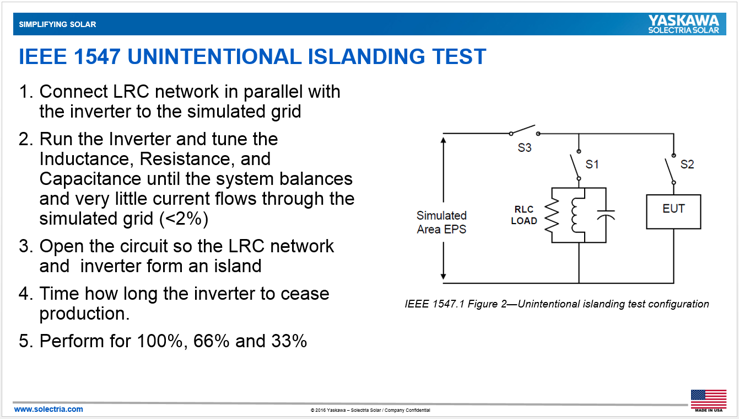
For more information about the anti-islanding test, please refer to the solutions page on this topic.
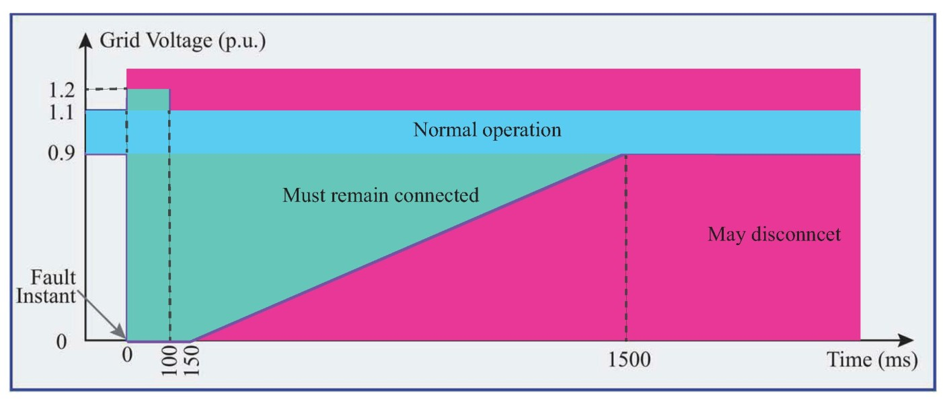
And then there’s the fault-ride-through capacity test.
In this test, a fault may occur on the power grid, during which the inverter must not shut down. The graph below illustrates this perfectly.
The tests mentioned last are related to the specifications of the AC grid emulator / AC load. In the following chapters, we will list a number of specific AC grid emulators and AC loads that can be used to perform these tests, again categorized by power rating.
All values mentioned in the paragraphs above may therefore vary depending on the Ned code for the specific country of installation. Make sure you obtain the correct information before configuring the inverter settings so that you test it using the correct values.
For more information, see:
- https://wetten.overheid.nl/BWBR0052336/2026-07-09
- https://wetten.overheid.nl/BWBR0052336/2026-07-09
- https://www.nen.nl/nen-en-50549-1-2019-en-255572
- https://www.nen.nl/nen-en-50549-10-2022-en-303217
These standards are continuously updated, so make sure you stay informed about the latest revisions.
In the following chapters, we will look at the required test equipment for these tests across the different power categories, namely:

