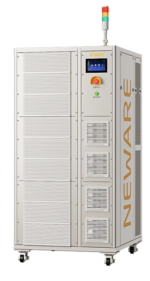
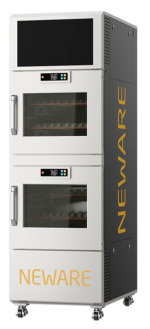
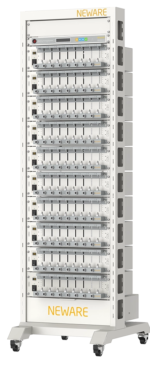
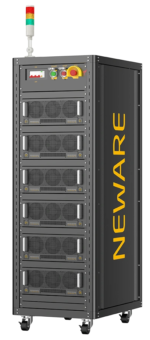
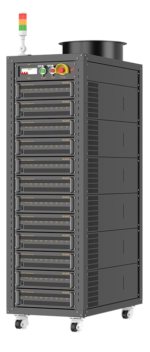
A battery tester is an advanced electronic instrument that charges and discharges a battery in a controlled manner according to precisely defined profiles. During these processes, voltage, current, temperature, and time are continuously measured, providing clear insight into how a cell, module, or pack performs under realistic operating conditions. Modern testers can execute complex charge and discharge curves, generate pulses, simulate driving profiles, and monitor safety limits.
Through this controlled loading, a battery tester can objectively determine capacity, internal resistance, efficiency, lifetime, and safety. The instruments record all electrical parameters with high accuracy—often down to microvolt and milliampere levels—and store the measurement data for analysis, reporting, and quality control.
In R&D laboratories, battery testers are used to characterize new cell chemistries, study degradation mechanisms, and optimize charging strategies. In quality control, they are deployed to validate production batches and detect deviations at an early stage. In production environments, they form the core of end‑of‑line testing, where every cell or module is checked for capacity, stability, and safety before being released.

