Introduction to Anti-Islanding
As demand for distributed energy resources (DERs) and electrification increases, ensuring safety and grid stability remains of critical importance. One of the most important safety mechanisms is anti-islanding protection. This protection prevents power from being supplied—for example, by a solar panel inverter—in the event of a grid failure. Anti-islanding ensures that DERs or grid-connected systems, such as solar panel inverters and V2G chargers, are quickly disconnected from the grid during such events.
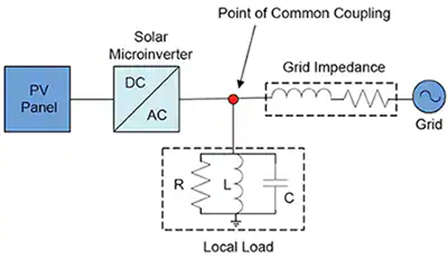
When a (grid) fault occurs, the inverter, V2G unit, or other DER must detect it and be able to shut down automatically. This is referred to as anti-islanding protection. Testing for anti-islanding behavior is a mandatory requirement in accordance with standards such as UL 1741 SA and IEEE 1547.1.
Read more on the following pages:

